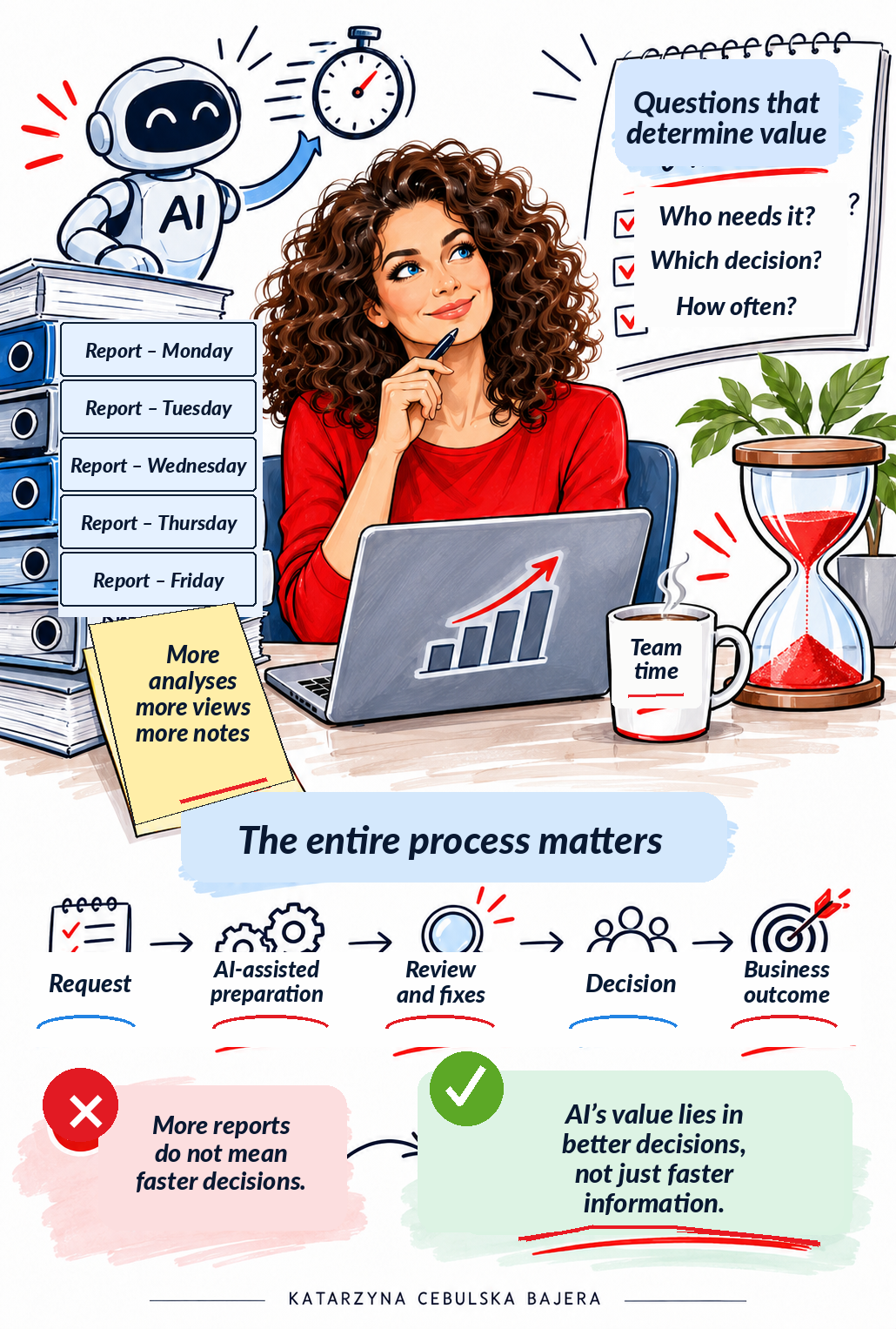
AI shortens the time needed to prepare a weekly report, so a manager starts asking for one every day, along with additional breakdowns and commentary. The entire saving is consumed before the team can put any of that time to other use.
How much a company gains from AI depends largely on those commissioning the work. Their expectations determine what happens to the time that has been freed up.
The decision is easy to justify: if an analysis can be produced faster, why not have more information? But that calculation leaves out the work that begins once the document has been generated. Someone still has to validate the data, reconcile discrepancies, read the conclusions and decide what to do with them. Information production accelerates, but the attention of the people expected to use it does not expand. A company can generate ever more analyses and still wait just as long for decisions.
I do not dismiss a new report simply because we did not have it before. Additional information may reveal a risk sooner or help us plan work better. But before I count it as a benefit of implementing AI, I want to know who needs it, which decision it is meant to inform, and how often.
I apply the same test to the time we save. If it is meant to lead to more conversations with customers, faster service or fewer backlogs, I have to make those outcomes part of the team’s priorities and change what I expect from them. That time will not automatically find its way there.
That is why, when evaluating an implementation, I look at the entire process, from request to decision, including reviews and revisions. If a proposal can be prepared faster but then sits for three days awaiting approval, shortening its preparation time further will make little difference to the customer. At that point, the decision is mine: which proposals genuinely need my approval, and which can I delegate to the team? Looking for further time savings in their part of the process will not solve the problem.